
Historically, vanilla plant was first cultivated by the Aztecs, in the forest of Mexico around 1530 years ago. Native Mexicans were the first who knew the use of dried Vanilla fruit as a freshener for chocolate drinks. However, Vanilla started to appear in Europe in 1721 which today, it is in our dinner.
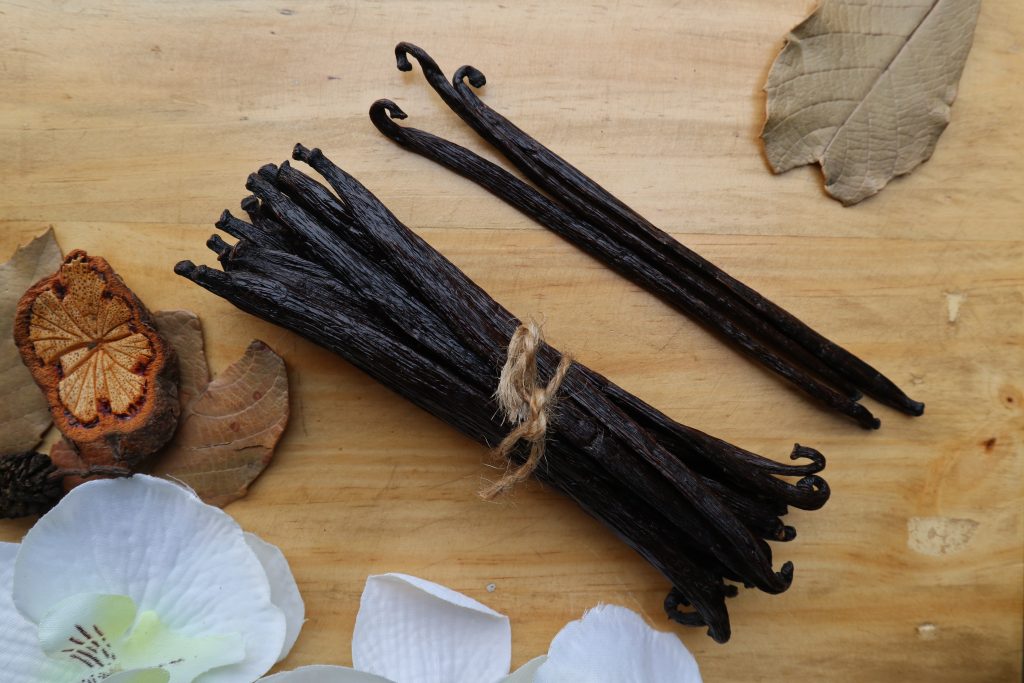
In Indonesia, the Vanilla Plant was previously brought by the Dutch in 1819. The initial purpose was to plant at the Bogor Botanical Garden to enrich the botanical collection initiated by Prof. Dr. Reinwadt. In 1864, Vanilla was able to be found in Temanggung, Central Java. Furthermore, Vanilla has been spread across Indonesia. In 1960s, Java became the fastest region in the process of developing Vanilla Plants. This was the background of Vanilla’s Export center which was then known as “Java Vanilla Beans”.
In Indonesia, vanilla plants are generally regarded as non-traditional plants. Currently, it has been rapidly developed, especially in Central Java and East Java. Large plantations such as coffee, chocolate and tea utilize Vanilla as a plant for diversification programs. During the Pelita I period, Vanilla Planting has also been developed in Aceh, South Sumatra, Lampung and Bali.
Indonesian vanilla content 2,75 %
In 2016, the world’s Vanilla Production was 7,940 tons, dominated by Madagascar at 37%, and Indonesia at 29%. Due to drought, cyclones, and poor farming practices in Madagascar, there are concerns about the global supply and costs of vanilla in 2017 and 2018. It then results in a higher intensity of criminality which leads some Madagascar farmers to arm themselves from losing their harvested fields.
Vanilla Producing Areas in Indonesia :
- East Java.
- Lampung, South Sumatra.
- East Nusa Tenggara.
- Bali, Nusa Tenggara.
- North Sulawesi.
- South Sulawesi.
- Jawa Barat.
- Ambarawa, Central Java.
- Temanggung, Central Java.
- Wonosobo, Central Java.
- D.I. Yogyakarta, Central Java.